Picture the hardware economy as an electric grid on the hottest night of the year. Every load is live at once — the AI cluster, the smartphone line, the server rack, the independent repair bench in a strip mall — and the operators have three levers: build generation, reroute transmission, or rewrite the rules about who may touch the wiring. In the five business days between August 10 and August 14, the industry's operators threw every switch at once, and the meters will be spinning for years.
Capital, Capacity and the Price of a Wafer
The first implication hides in the capital structure. TSMC's July revenue of NT$467.58 billion — roughly $14.5 billion, up 44.7 percent year on year — is not a cyclical spike; it is the secular demand curve for AI accelerators expressing itself through a single balance sheet. The company has lifted its 2026 capital-expenditure guidance to $60 billion–$64 billion, and Intel, in the same breath, priced 210.5 million new shares at $95 to raise $20 billion after what bankers described as more than $100 billion of investor demand. When leading-edge capacity is financed like a rate-base utility — equity issued against multi-year hyperscaler purchase orders — the marginal dollar stops flowing to mature-node and legacy capacity, and the monopsony power of a handful of cloud buyers distorts the entire supply curve. The consequence for gadgets is a quiet tax: S&P Global sees tight 40-nanometer-and-older foundry capacity extending into late 2026, and Synopsys chief executive Sassine Ghazi has warned that memory price rises and shortages are "likely to continue through 2027." Every bill of materials downstream — the mid-range phone, the fleet laptop, the SSD in a local studio's NAS — now competes for wafers against an AI cluster that amortizes silicon faster than any workload in history.
The Dilution Discount
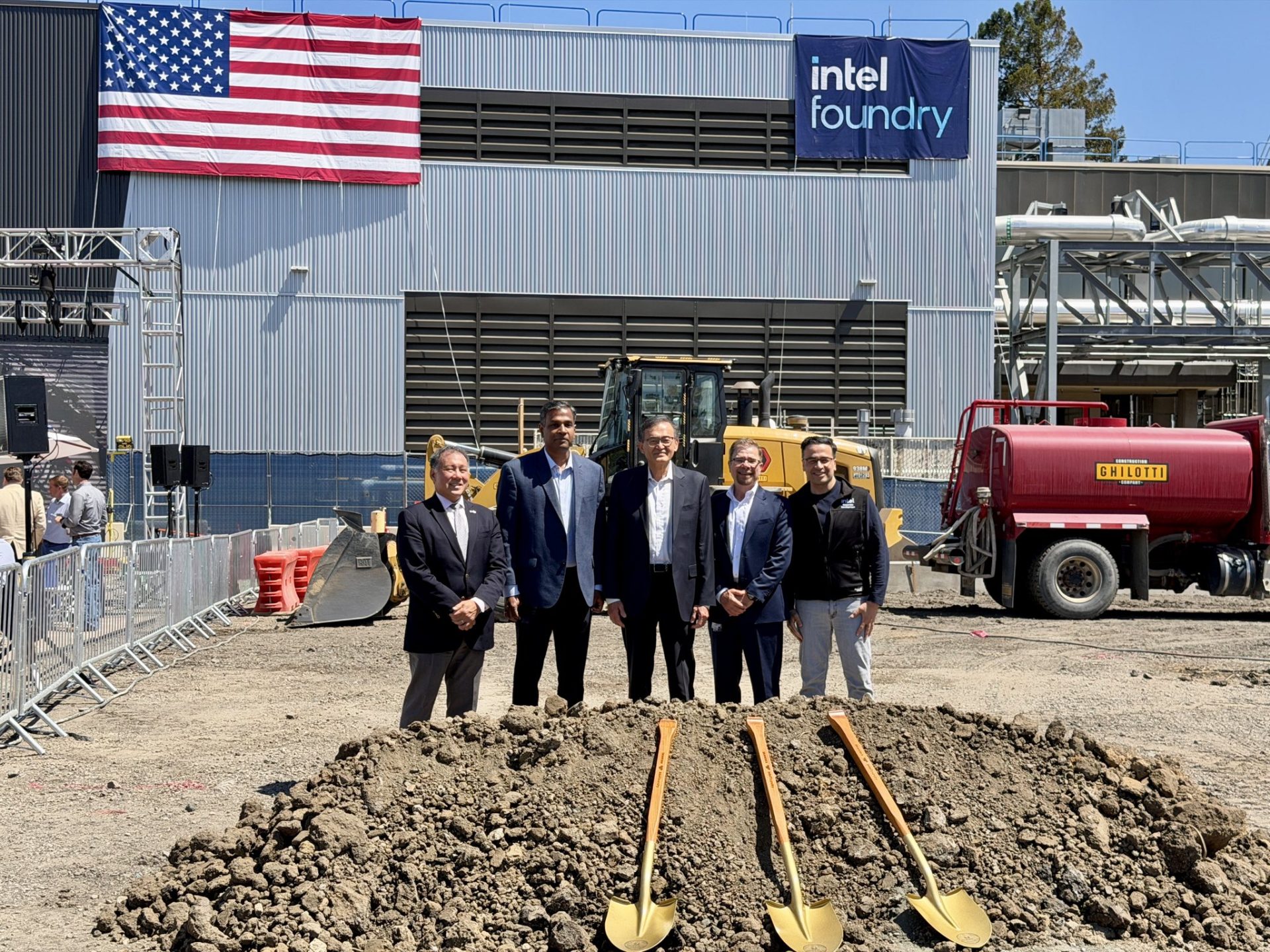
It is tempting to read the week as unalloyed bullishness, and the balance sheets argue otherwise. Intel Foundry has posted $4.5 billion of revenue against a $2.5 billion operating loss; a $20 billion cash injection buys tools and time, not customers. Equity raised at a premium after a stock surge is dilution dressed as momentum, and history is unkind to foundries that finance capacity ahead of contracted demand. TSMC's record July, likewise, is a concentration signal as much as a health signal: growth of that magnitude from a single demand vector tethers the sector's near-term fate to one capital-expenditure cycle — the hyperscalers' — rather than to broad-based device volume.
Intelligence Moves to the Edge of the Hand
The second implication sits in the device layer, where inference is migrating from the data center to the palm. Google's Pixel 11 family is the clearest artifact: Magic Capture evaluates on the order of 400 frames per moment on-device, and the Pixel 11 Pro Fold pairs that compute with a thinner, brighter mechanical stack. On-device inference at that scale is a memory and packaging story before it is a software story — higher DRAM content per handset, more heterogeneous integration, more advanced-packaging slots that are already the binding constraint in the AI supply chain. Apple's Houston center cuts the same grain: AI servers assembled in Texas, Mac mini production repatriated later this year, and free training for small and medium manufacturers that reads less like philanthropy and more like supply-chain apprenticeship. The net effect on Hardware & Gadgets is a market split into two tiers — devices with the DRAM budget and NPU headroom to run local models, and everything else, which will age faster, resell lower and exit the upgrade cycle sooner.

The Wrench Becomes a Policy Instrument
The third implication is the one the market will misprice longest: repair is now macro policy. The presidential memorandum directs the EPA to clarify emission-repair rights, to deprioritize tampering enforcement against good-faith owners, and — the sleeper provision — to recognize alternative certifiers for aftermarket parts, breaking a certification bottleneck that had effectively delegated federal compliance to a single state process. Add the 2026 wave of state right-to-repair bills and a House committee advancing federal repair provisions, and the direction of travel is clear: parts provenance and certification will be multi-vendor, and the aftermarket becomes a regulated, investable sector rather than a gray market. The memorandum's legal theory — that certification monopolies inflate consumer costs — does not care whether the sealed component is an emissions part or a paired battery, so the logic will migrate from tailpipes to smartphones. Total cost of ownership, not sticker price, becomes the competitive axis.
In Defense of the Spare Transformer
Skeptics will call the reshoring and subsidy complex a misallocation, and on pure economics they have a point — but pure economics ignores tail risk. A redundant transmission line looks like waste until the primary line fails; TSMC's Arizona ramps, Intel's secure-enclave work under RAMP-C, and the EU's Chips Act 2.0, which pivots from supply subsidies toward demand creation, are insurance against a contingency no board can quantify. The premium is real and shows up in gadget prices; the counter-argument is that the alternative — a single-point-of-failure geography for the world's most consequential manufacturing — carries an unpriced premium that is orders larger.
1987 Rhymes: SEMATECH, Magnuson-Moss and the Long Memory of Hardware
The last time Washington, Tokyo and Taipei rearranged the silicon order, the year was 1987. The 1986 U.S.-Japan Semiconductor Agreement imposed price floors and market-access promises; SEMATECH pooled American capital and R&D the following year. Two lessons survived. First, state-coordinated capital stabilized supply but did not pick the winner: the fabless-foundry model — embodied by TSMC, founded that same year — absorbed the value, while the subsidized champions of the era lost their lead within a decade. Second, on the consumer side, the Magnuson-Moss Warranty Act of 1975 had already shown that opening repair and parts competition did not collapse OEM margins; it shifted profits from parts monopolies into service, software and brand. August 2026 repeats both experiments at once: capital without customers would replay SEMATECH-era overcapacity, while repair liberalization will likely enlarge, not shrink, the legitimate hardware economy.
The Playbook Before the Window Closes
- Regional procurement managers: term-contract memory-heavy equipment now; the shortage signal through 2027 is explicit, and a Q4 refresh budget set in September will beat a Q1 budget set in denial.
- Independent repair shops: build the compliance muscle — documented parts provenance and calibration records will be the entry ticket when multi-vendor certification reaches consumer electronics.
- Citizens: weight repairability scores and parts availability into purchase decisions the way you check a car's service network; the 2026 legislative wave will widen the resale gap between repairable and sealed devices.
- Small manufacturers: the free training at Apple's Houston center is a subsidized upskilling pipeline; use it before cohort seats fill.
February 2027: Reading the Meters
Expect three readable meters by late winter. One: memory and storage contract pricing up materially, mid-tier handset and PC average selling prices following, and "AI-capable" versus "legacy" becoming the explicit tiering language of retail. Two: Intel either names a marquee external foundry customer — several analysts already see a win as imminent — or the equity narrative resets to dilution and the stock surrenders its August pop. Three: the repair economy formalizes, with at least one federal repair provision advancing and OEM certified-parts programs launching defensively. The grid will not brown out, but the meters will run faster; the operators threw five switches this week, and the load is coming either way.