Triple-digit bookings, a Nasdaq listing wave and a compressed cryptographic deadline arrived in the same five trading days. The prize is still theoretical — the pickaxes are already invoiced.
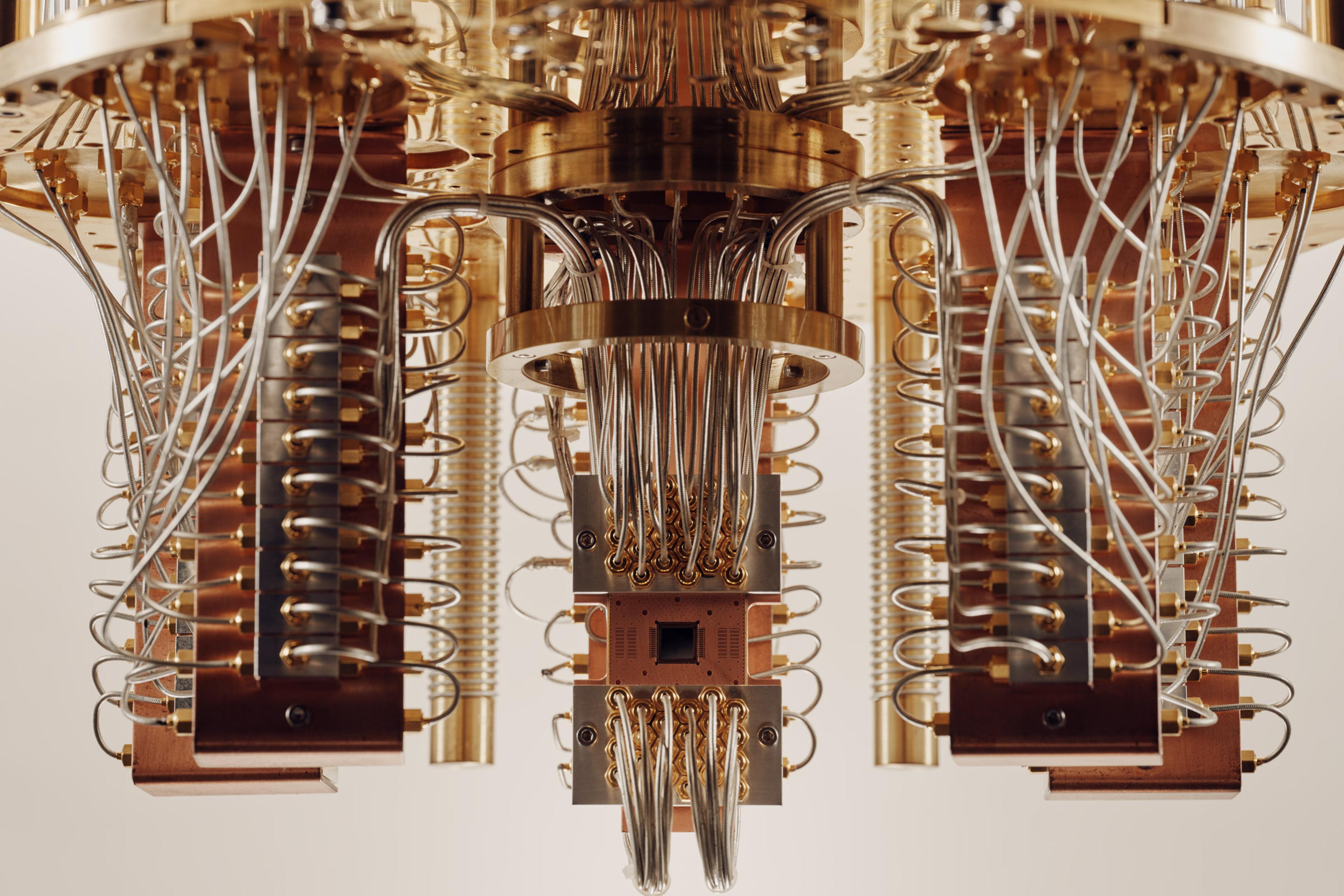
In 1849, the most reliable fortunes in California were not panned at the riverbed; they were made at the dry-goods store. Sam Brannan reportedly became the territory’s first millionaire by cornering the supply of shovels and panning kits, then publicizing every new gold strike to drive traffic to his shelves. The pattern — a speculative race toward a distant prize, monetized first by the sellers of the equipment — is the correct lens for quantum computing in the third quarter of 2026. The gold, meaning fault-tolerant computation at cryptographically relevant scale, remains unproven. The pickaxes — QPU shipments, control electronics, cryogenics, foundry capacity and post-quantum cryptography remediation — are on the invoice today.
The Quarter the Tickers Turned
Across five trading days, IonQ reported revenue up 287 percent to $80.1 million and raised full-year guidance to $290 million; D-Wave disclosed first-half bookings up 1,120 percent to $35.5 million; Rigetti posted 185 percent revenue growth beside a $100 million CHIPS Act letter of intent; the SEC cleared Pasqal’s registration for a Nasdaq debut; and Shanghai’s TuringQ moved toward becoming China’s first publicly listed quantum firm. In the same window the security ledger tightened: Google’s March resource estimates and an Oratomic preprint pulled the expected arrival of a cryptographically relevant quantum computer inside the decade, and Google, Cloudflare and U.S. federal agencies now carry post-quantum migration deadlines between 2027 and 2030.
Capital Formation Is Now the Industry’s Core Competency
Quantum pure-plays have crossed from grant-funded research programs into a tradable asset class, and that changes behavior more than any benchmark result. When the cost of capital is set by public markets rather than appropriations, bookings replace citations as the metric of record, and supply-chain acquisition — IonQ’s SkyWater, D-Wave’s Quantum Circuits, QCi’s NHanced — replaces organic R&D. IBM chairman and CEO Arvind Krishna put the posture plainly in committing more than $10 billion to the roadmap: “The quantum era is no longer ahead of us, it has started.” What coverage misses is the coupling risk: quantum names now trade as high-beta adjuncts to the AI complex, inheriting its drawdowns on schedule.
The State Is the Real Customer
Read the filings closely and the marginal buyer of quantum hardware is the sovereign: CHIPS Act letters of intent, AFRL and DARPA taskings, Canada’s $20.3 million defence hub, national quantum initiatives from Seoul to Stuttgart. That makes the revenue base fiscal policy by another name. The unseen implication for the quantum computing industry is concentration risk — an appropriations cycle, not a technology setback, is now the most probable cause of the next bookings miss.
In Defense of the Bookings Mirage
Skeptics correctly note that D-Wave’s quarterly revenue is $3.08 million against a bookings surge, and that IonQ still posts GAAP losses. The critique reads the wrong statement. In an infrastructure land-grab, backlog, fab access and validated fidelity benchmarks are the leading indicators; revenue recognition arrives lumpy, with government milestones. A 1,120-percent bookings curve is not profit, but it is a demand signal that did not exist twenty-four months ago, and the SkyWater acquisition converts a vendor relationship into a balance-sheet asset.
The Cryptographic Externality Nobody Budgeted For
The same capital wave is financing the machine that breaks RSA-2048, and harvest-now-decrypt-later means the breach precedes the machine. Regional banks, hospital networks and municipal utilities hold data with twenty-year sensitivity horizons, yet post-quantum migration is being treated as a cryptography project when it is actually an inventory project: you cannot rotate keys you cannot find. Certification infrastructure already lags the threat — as of early 2026 no HSM vendor has completed a FIPS 140-3 Level 3 validation including PQC algorithms. Bitcoin developer Bit Paine captured the asymmetry: “I still think roughly 10 years is the more likely timeframe, but I assign an uncomfortably high likelihood that we see something disruptive within five years.”
1999, Revisited: What Dark Fiber Teaches Quantum Capital
Between 1996 and 2001 carriers laid tens of millions of miles of fiber against demand projections that never arrived; Global Crossing and WorldCom collapsed, and the fiber remained — its post-crash cheapness becoming the substrate of the cloud economy. Two lessons transfer directly. General-purpose technologies overbuild, crash, and then vindicate themselves at the asset level rather than the equity level. And the survivors are the operators with real assets and disciplined balance sheets, not the best storytellers. Quantum’s bookings wave is smaller in scale and identical in shape: the QPUs, the cryogenics and the PQC remediation will outlive the tickers that finance them.
2029 Is a Boundary, Not a Prophecy
The alarmist reading overreaches in the other direction. Resource estimates are engineering bounds, not schedules; Quantinuum’s 94 error-protected logical qubits operate just beyond break-even, and QuEra’s 2-to-1 encoding ratio remains a simulation result. Corporate 2029 deadlines cluster because that is where precautionary capital budgeting lands, not because Shor-at-scale is imminent. Over-alarm carries its own price: migration fatigue, consultant extraction, and a Y2K-style non-event that could poison security budgets for the decade when the threat turns real.
February 2027: The Landscape Six Months Out
Expect Pasqal to close and trade as PSQL within weeks and Quantinuum’s confidential S-1 to surface publicly by Q1 2027, setting the first public-market valuation anchor for trapped-ion hardware. Q3 and Q4 prints will test whether triple-digit bookings growth decelerates; because the complex trades as a basket, one miss compresses all names. On the security side, OMB phase-one inventory mandates push PQC requests into FY2027 budgets, and at least one U.S. state regulator issues a cryptographic-inventory directive for banks and utilities. The binding constraint on 2027 delivery schedules will be the unglamorous layer — control electronics, cryogenics and decoder software — not qubit counts.
Positioning Before the Cycle Turns
- Regional CISOs (banks, hospitals, utilities): start the cryptographic inventory now; the inventory is the migration. Demand crypto-agility clauses in every renewal.
- Public-sector IT buyers: require PQC transition roadmaps in RFPs; NIST IR 8547 deprecates RSA-2048 by 2030 and disallows it by 2035.
- Investors: separate bookings from revenue, watch backlog concentration and gross margin, and size positions as high-beta AI adjuncts, not utilities.
- Local manufacturers and electronics firms: the margin sits in cryogenics, RF control and advanced packaging — the pickaxes, not the gold.
- Workforce boards and community colleges: cryogenic technicians, RF engineers and QEC decoder developers are the 2026–27 hiring wave; stand up certificate programs now.
- Citizens: ignore “quantum-safe” consumer snake oil; the meaningful attack surface is institutional, and your protection is your institution’s migration discipline.
Sources: IonQ, D-Wave and Rigetti Q2 2026 filings (Aug 7–8, 2026); SEC Pasqal effectiveness order (Aug 5, 2026); Quantum Computing Report industry digest (Aug 8–10, 2026); IBM Newsroom $10B commitment (Jun 2, 2026); The Quantum Insider PQC timeline analysis (Aug 7, 2026); Nature 652, 552–553 (2026) on Google and Oratomic resource estimates.