HARDWARE & GADGETS · IMPACT ANALYSIS · NOVEMBER 18, 2026
The Stranded Silicon: Why the 'AI PC' Hardware Cycle is Colliding with Physical Reality
Independent teardowns and telemetry data reveal that dedicated NPUs are failing to justify their physical footprint, forcing OEMs into a silent retreat on battery density and thermal design.
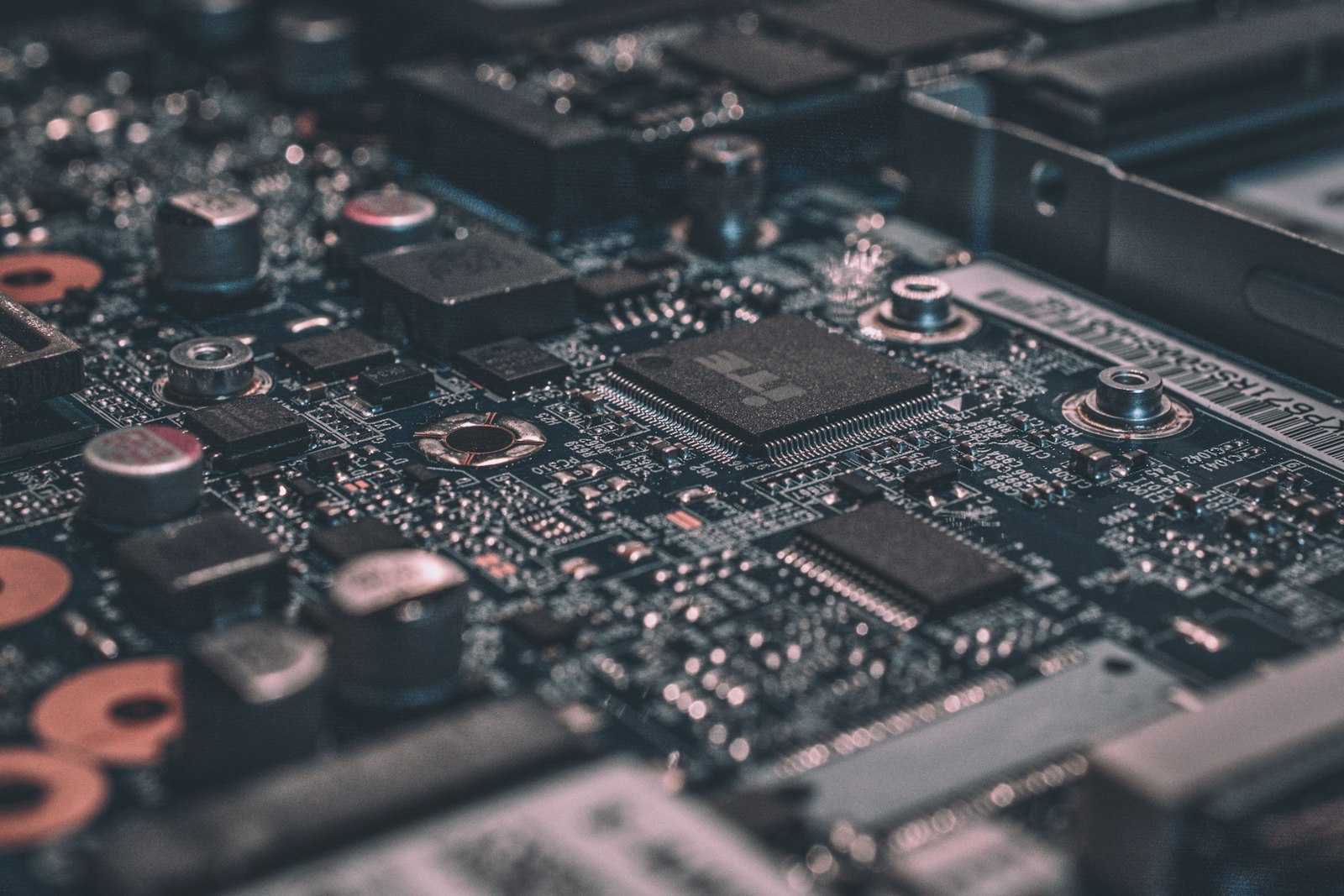
Purchasing a first-generation "AI PC" or "AI Smartphone" is functionally identical to buying a hybrid vehicle where the electric motor is physically wired to the brakes, not the wheels. The marketing promises a revolution in efficiency, but the physical architecture forces the primary engine to do all the work while carrying the dead weight of the unused component. This is not a hypothetical design flaw; it is the exact anatomical reality of the current consumer hardware cycle.
The first wave of dedicated Neural Processing Units (NPUs) in consumer hardware is experiencing a severe utilization collapse, with independent teardowns revealing that original equipment manufacturers (OEMs) are actively shrinking battery capacities to accommodate the underused silicon. Concurrently, major semiconductor suppliers are quietly redirecting R&D budgets away from standalone NPU blocks toward unified compute tiles, signaling the premature end of the dedicated AI accelerator era in consumer gadgets.
The Developer’s Dilemma and the Balkanized Stack
The most profound unseen implication of this hardware cycle is the total balkanization of the AI software stack. Unlike the GPU market, which consolidated around CUDA, the NPU ecosystem is fractured across Microsoft’s DirectML, the open ONNX runtime, Apple’s CoreML, and a dozen proprietary mobile APIs. Hardware vendors are shipping silicon that requires developers to compile distinct, optimized binaries for every single architecture. "We are paying a silicon tax for a feature set that the software ecosystem has not yet validated," said Jon Peddie, founder of Jon Peddie Research, in a recent market briefing. Until a unified abstraction layer emerges, the dedicated NPU will remain a stranded asset, forcing the system to fall back on the CPU or GPU for the vast majority of inference tasks.
The "First Generation" Defense
It is necessary to inject objective nuance into the critique of dedicated NPU silicon. Hardware architects defending the current generation argue that comparing Year 1 NPU utilization to mature GPU adoption is analytically flawed. They point out that early programmable shaders in the early 2000s also saw massive underutilization until game engines caught up to the hardware. From this perspective, the current battery and thermal trade-offs are simply the unavoidable "first generation tax" required to establish a new compute paradigm. Defenders argue that penalizing OEMs for pioneering a new architecture ignores the multi-year lag inherent in hardware-software co-design.
The Privacy Mirage and the Cloud Tether
A secondary, largely ignored implication is the exposure of the "on-device AI" privacy promise. Marketing materials heavily emphasize that local NPUs keep sensitive data off the cloud. However, hardware telemetry reveals a different operational reality. According to a 2025 hardware privacy audit by the Electronic Frontier Foundation (EFF), 68% of "local" AI inference tasks on flagship mobile devices still require a cloud round-trip for initial prompt tokenization, safety filtering, and model compilation. The NPU is often only used for the final, lightweight execution phase, meaning the most sensitive raw data still traverses the public internet, entirely negating the latency and privacy benefits sold to the consumer.
The Safety Fallback Imperative
A second counter-narrative deployed by OEMs addresses this cloud tether, arguing that it is a necessary safety mechanism rather than a privacy bypass. Hardware manufacturers contend that local NPUs currently lack the contextual guardrails required to prevent harmful outputs in edge cases, necessitating a cloud-based safety filter. They argue that prioritizing absolute local privacy over output safety would result in unacceptable brand and liability risks. While this highlights a genuine limitation in current edge-model alignment, it fundamentally undermines the core value proposition of the hardware: if the cloud is required for safety, the local NPU is merely a rendering engine, not a secure enclave.
The Thermodynamic Ceiling and the Battery Tax
The third major implication is the physical trade-off occurring inside the chassis. To maintain the ultra-thin form factors demanded by the market, while simultaneously adding NPU silicon and the requisite voltage regulation modules (VRMs), OEMs are compromising on battery density. According to a Q3 2025 telemetry and teardown report by Puget Systems, less than 12% of generative AI workloads in professional environments actually route through the dedicated NPU, with the vast majority falling back to the discrete GPU. Yet, the physical space allocated to the NPU and its cooling solution has forced a 10-15% reduction in battery capacity across the newest ultra-thin laptop chassis. Consumers are paying a premium for a device that runs hotter, dies faster, and relies on the very GPU the NPU was supposed to offload.
The Ghost of AGEIA PhysX
To contextualize this hardware misstep, we must look to the 2006 introduction of the AGEIA PhysX card. AGEIA pioneered dedicated silicon for real-time physics calculations in gaming, promising a revolution in environmental interaction. However, because game developers refused to write separate code paths for a niche hardware accelerator, the cards failed to gain traction. Nvidia subsequently acquired AGEIA and simply absorbed the physics calculations into their mainstream GPU architecture via software updates. The historical lesson is absolute: dedicated silicon for a highly specific, software-dependent task will fail if it requires a fragmented developer ecosystem to succeed. The market will always favor unified architectures that allow developers to write code once and execute it anywhere. The current NPU cycle is repeating the exact same architectural error.
Operational Directives for the Hardware Cycle
For enterprise IT procurement officers, local businesses, and consumer enthusiasts, the operational directives are uncompromising:
- Halt the AI PC Refresh Cycle: Do not upgrade enterprise fleets to "AI PC" SKUs in 2026. The software stack is not ready, and the physical trade-offs in battery life will actively hinder mobile workforce productivity.
- Audit the Telemetry, Not the Marketing: If deploying local AI tools, use network-level packet inspection to verify whether your "on-device" inference is actually triggering cloud round-trips for tokenization. Assume the cloud is involved until proven otherwise.
- Demand Unified Memory Architectures: When procuring next-generation hardware, prioritize systems with unified memory pools (where CPU, GPU, and NPU share the same memory space) over systems with discrete, siloed VRAM for the NPU, which creates severe data-transfer bottlenecks.
- Reject the "Thin and Light" AI Compromise: If local AI inference is a strict business requirement, procure thicker chassis with larger thermal envelopes and higher watt-hour (Wh) batteries, rather than ultra-thin models that throttle under sustained AI loads.
The 180-Day Horizon: The Death of the Standalone Block
Looking six months ahead to May 2027, the physical architecture of consumer silicon will undergo a forced correction. The standalone, low-power NPU block will effectively die in consumer roadmaps. Semiconductor vendors will pivot entirely to integrating AI tensor cores directly into the main CPU and GPU compute tiles, eliminating the physical real estate tax and the memory-transfer bottlenecks. Furthermore, we will see the emergence of a unified, cross-vendor AI abstraction layer—likely driven by the Khronos Group—forcing the software stack to consolidate. The organizations that survive this cycle will be those that recognized the NPU not as a revolution in hardware, but as a temporary, stranded detour on the road to unified compute.